No running water, electricity only when the sun is shining, and a “shower” outside with a bucket and scoop: At the off-grid farm La Serra near Besalú in Catalonia, young people from Germany, Italy and Spain experience how directly their everyday lives depend on the resources available. Under the motto “Bee Humble”, they explore sustainability, living in community and mental wellbeing. They also help to develop the site itself.
Special thanks to Jeremy, Alejandra and Tobias, who documented their observations and experiences as on-site reporters for this article.

La Serra is an unusual place. The initiative Queering the Pathway is developing the farm as a nature-based venue for camps, youth activities and international encounters. Their aim is to create an explicitly queer- and neuro-affirming space that welcomes a wide range of people. The site is completely disconnected from the public electricity and water networks. The project partners from Bochum, Barcelona and Rome deliberately chose La Serra for their international youth encounter so that the group could actively support the development of the site.
Limited Water, Electricity and Screen Time
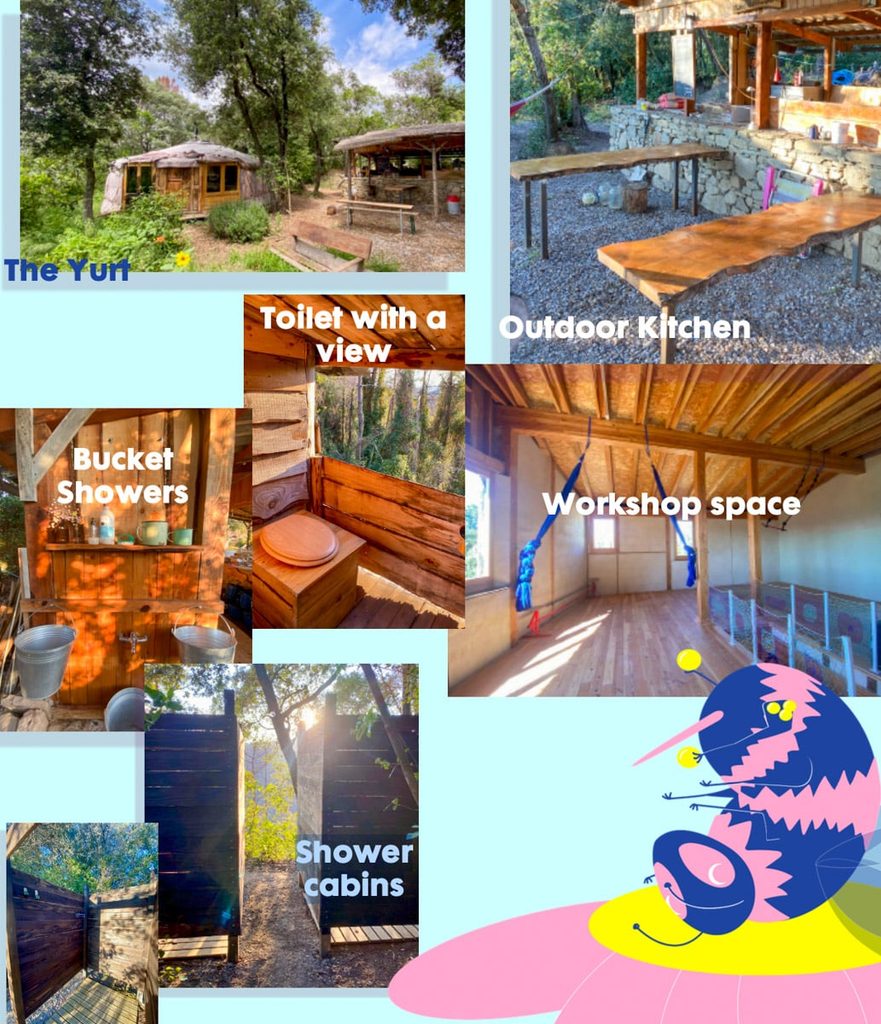
The group has to adapt to the limited supplies and infrastructure on site. The residents fetch drinking water from a spring that is about an hour away. Electricity comes from solar panels only. Dry and composting toilets, biodegradable toiletries and the economical use of water are also part of daily life. Many other things are different from home, too: to save electricity and break free from digital pressures, the group has agreed on a clear rule: smartphones are only switched on once a day for a strictly defined hour. That’s enough time to get in touch with home and perhaps take a quick look at the vast world of social media.

For the rest of the day, instead of constantly staring at their screens, the participants spend their time together. They focus on conversations, shared tasks and their surroundings. This conscious break from constant digital distraction is a key part of the youth encounter’s concept, which also aims to create space for reflection and mental wellbeing.
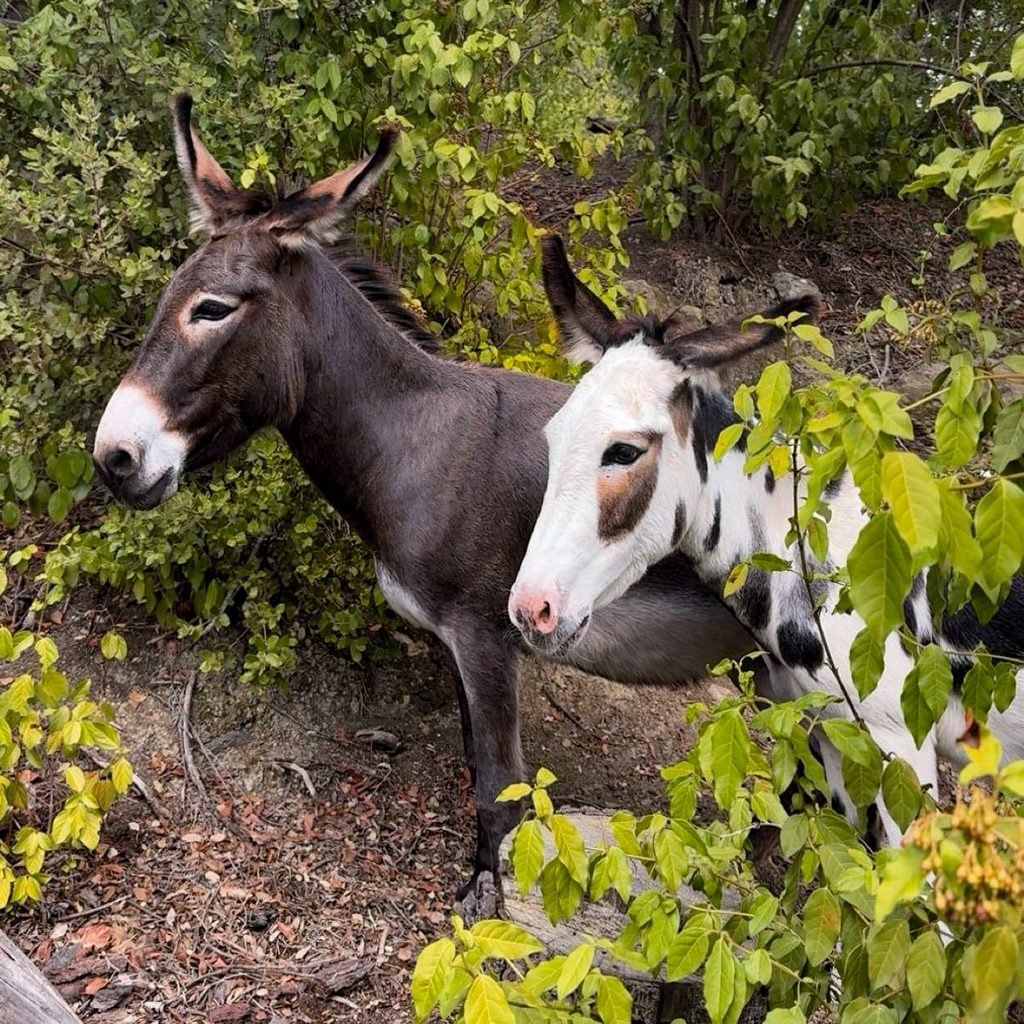
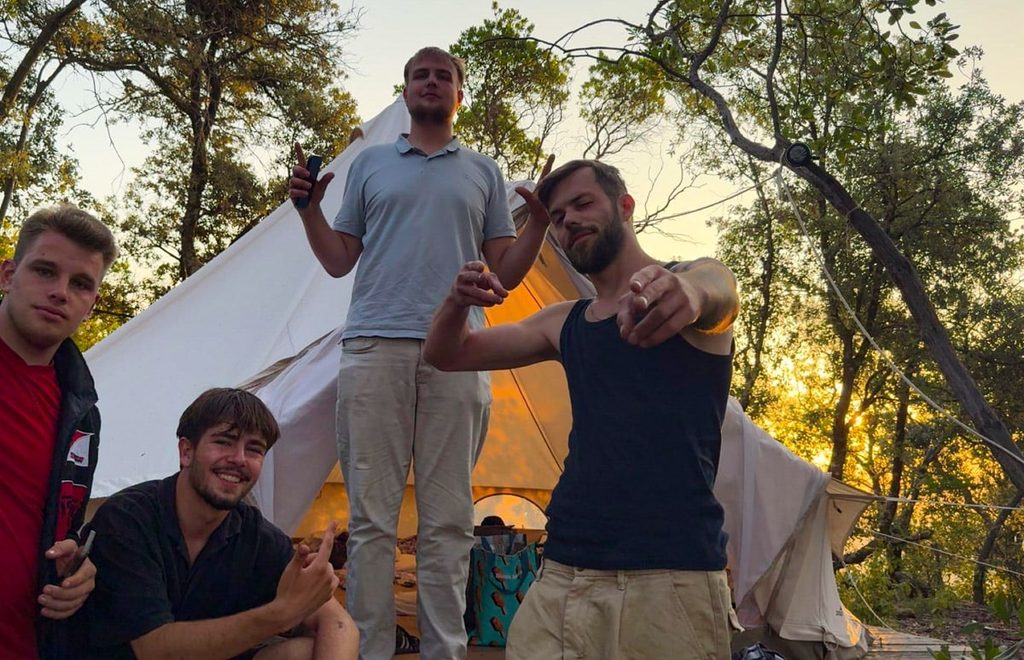
Overall, daily life at La Serra requires a significant amount of organisation: the group sleeps in tents, some of which are several minutes’ walk from the central meeting point. The participants take care of the farm’s donkeys, chickens, dogs and cats, and also help with other daily tasks. The weather is a recurring challenge: on two days, severe storms rolled in, forcing the young participants to leave their tents and seek safety in the main building. On hot days, however, temperatures rise to around 40 degrees.
No Luxury: A Pool for Hot Summer Days
Anyone living outdoors in a tent urgently needs a way to cool down in the intense summer heat. Until now, this has been a challenge at La Serra. To make the off-grid farm better suited to youth groups in summer, the project partners therefore decided to build an important piece of infrastructure during their youth encounter: a pool for La Serra.
First, the young people levelled the ground with sand and prepared the timber. Jeremy, Alejandra and Tobias describe the work as physically demanding and, at times, frustrating. Nevertheless, the group carried on working, co-ordinated their efforts and brought the demanding project to a successful end. But how do you fill a swimming pool in a place with no water supply? In fact, the participants had the water delivered to the site by truck. For La Serra, this is a conscious compromise: the pool uses water, but during the hot Catalan summers it offers a sheltered place to cool off.
Exploring the Region Together
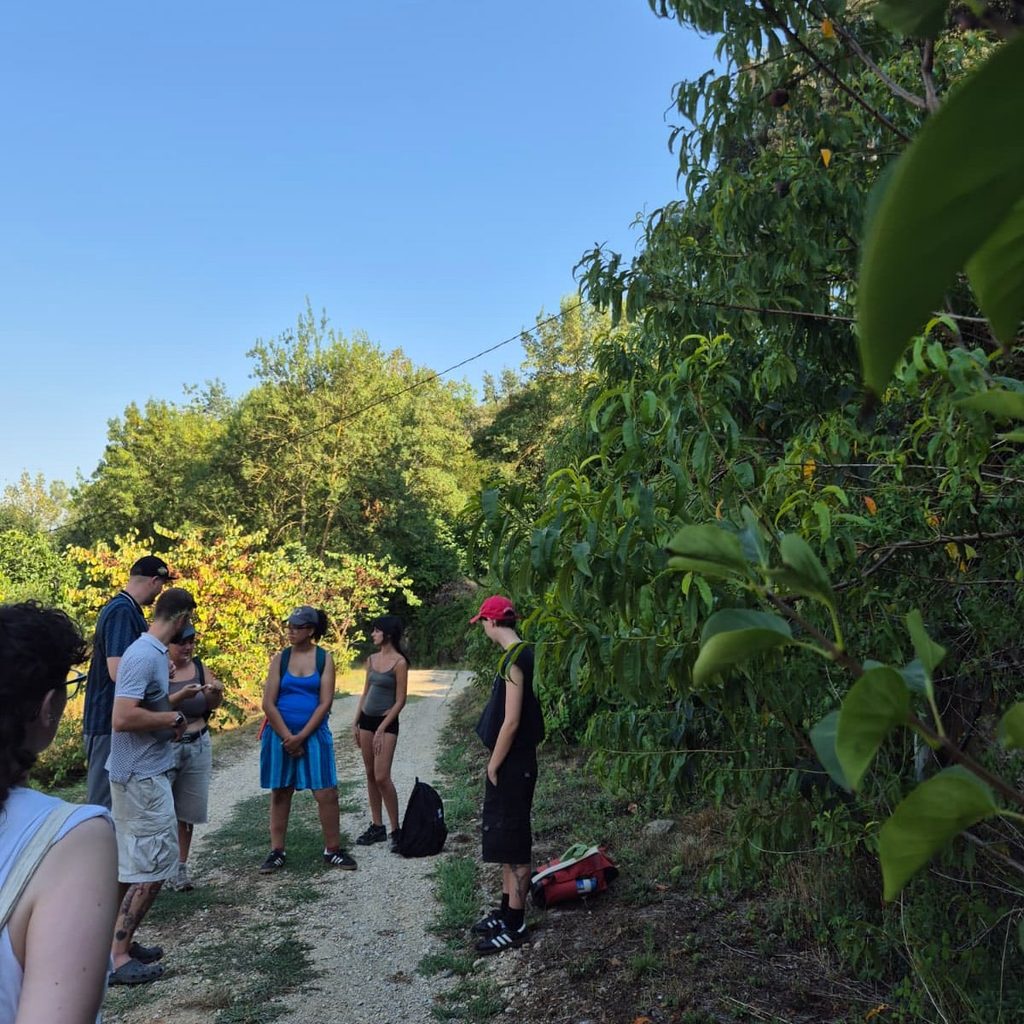
Despite all this work, there was still time for other activities: on a hike along the Riu Fluvià, one of Catalonia’s most unspoilt rivers, the participants collected litter left behind and learnt more about the region’s flora and fauna along the way. They visited the medieval town of Besalú and the provincial capital, Girona. In self-organised workshops, the groups also exchanged ideas on the local projects they each intend to implement back home as part of Generation Europe – The Academy.
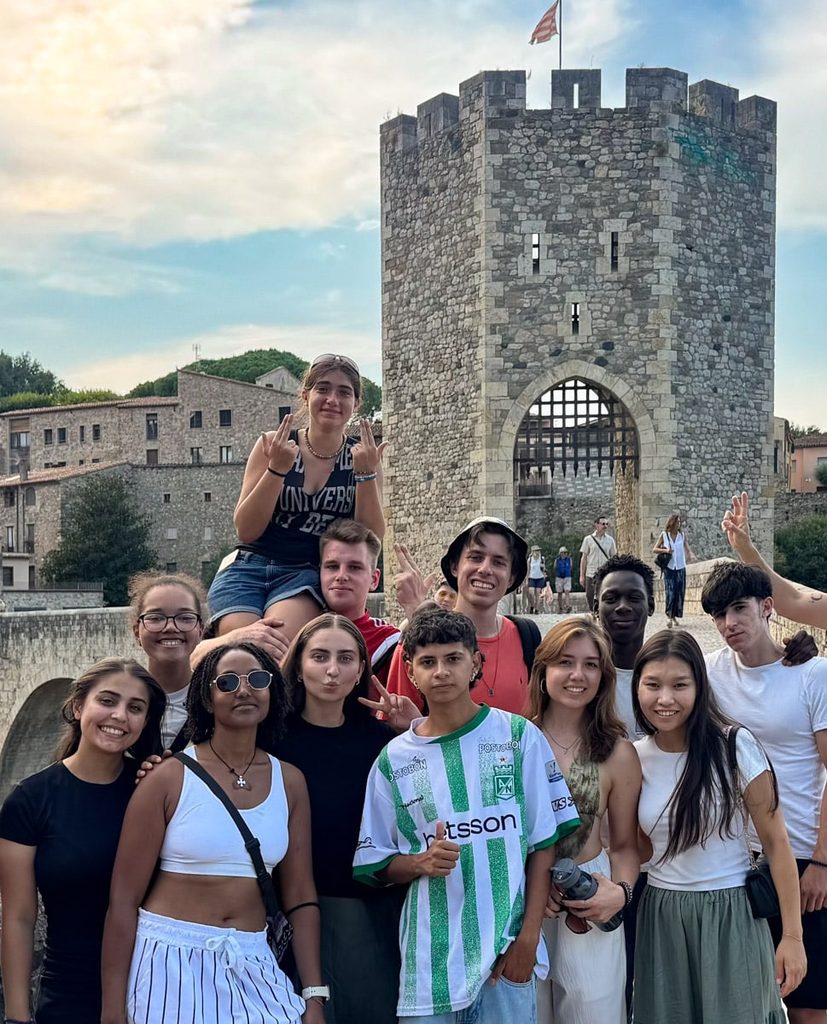
The three-year project partnership making all this possible consists of the International Youth Work Office of the City of Bochum in collaboration with the Falken Bochum, Càlam. Art, Educació, Sostenibilitat from Barcelona and Meta Cooperativa Sociale Onlus from Rome. Next year, the groups will meet for an international youth encounter in Italy. The third encounter will take place in Germany in 2028.