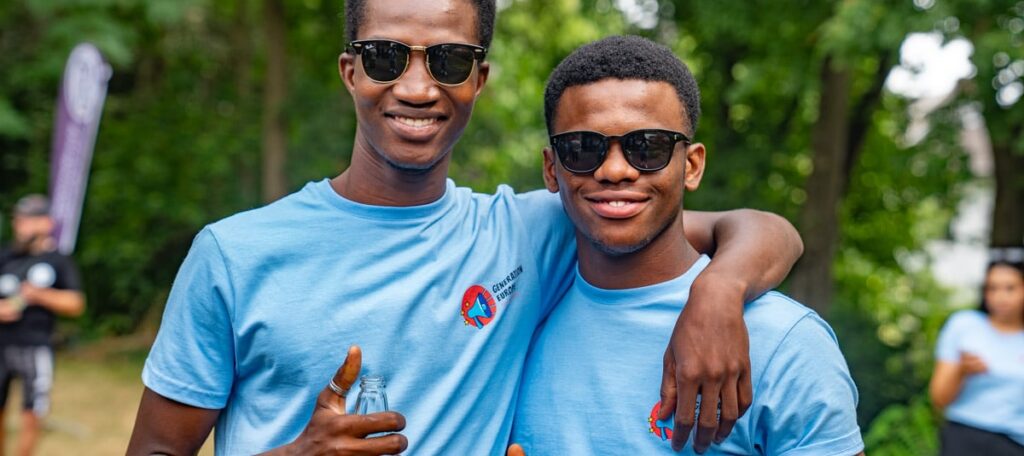
Who actually decides what Europe’s future will look like – and who gets to have a say? At the international youth encounter ‘Our Europe, Our Voices’ in Essen and Oberhausen, young people from Germany, Italy and Spain made their very personal answers heard: through, among other things, a jointly produced music video and direct conversations with politicians and other stakeholders.

“We have our future in our hands,” the young musicians confidently declare in the song “Together United We Stand”. They rap and sing in Italian, German, French and English. Some passages are thoughtful, some confronting and others playful. They sing about social pressure, loneliness and getting back up after a setback. They also reject racism. Their positive counterpoint is a series of scenes showing shared experiences and the international group dancing, living and working together: ‘We are together, we are: Generation Europe.’

The song and video were created during the international youth encounter in the music studio at the Parkhaus youth centre in Oberhausen. The creative workshops offered a practical setting in which the participants could connect personal experiences with social issues such as standing up against discrimination and for social justice.

Questions for Local Politicians
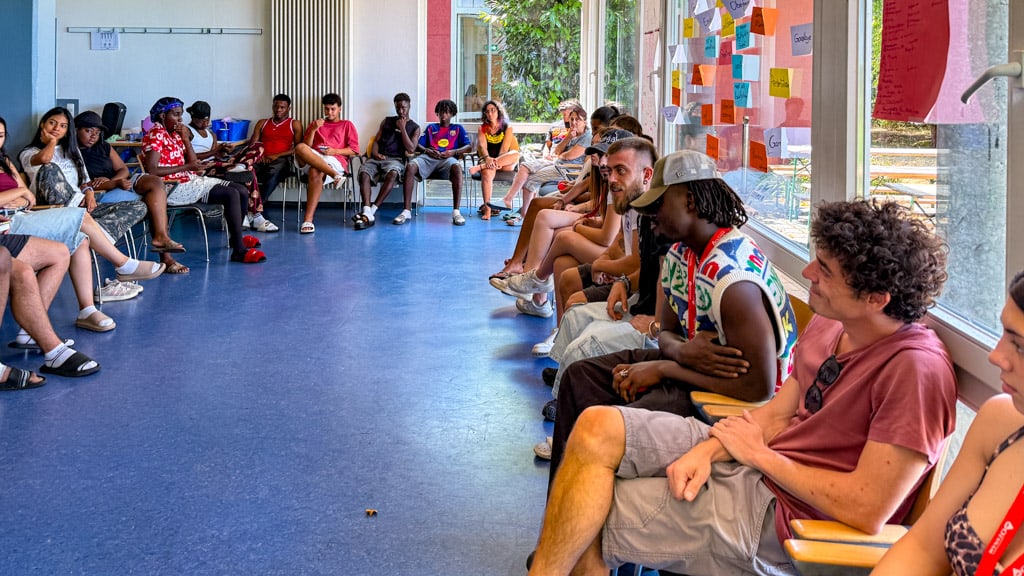
At a self-organised stakeholder day, the young activists demonstrated that they want to have a say not only artistically but also politically. They invited local politicians from different parties and representatives of the local youth welfare office to a structured discussion. In advance, they had prepared specific statements and questions to discuss the actual conditions for youth participation at a local level. What support do young people need? How can local authorities guarantee them a real say instead of merely engaging in tokenism? The direct dialogue debunked the common stereotype of a generation that is not interested in politics. The guests were impressed by the depth of the questions and the young people’s determination to help shape social developments in their communities.
Role Plays and Joint Agreements
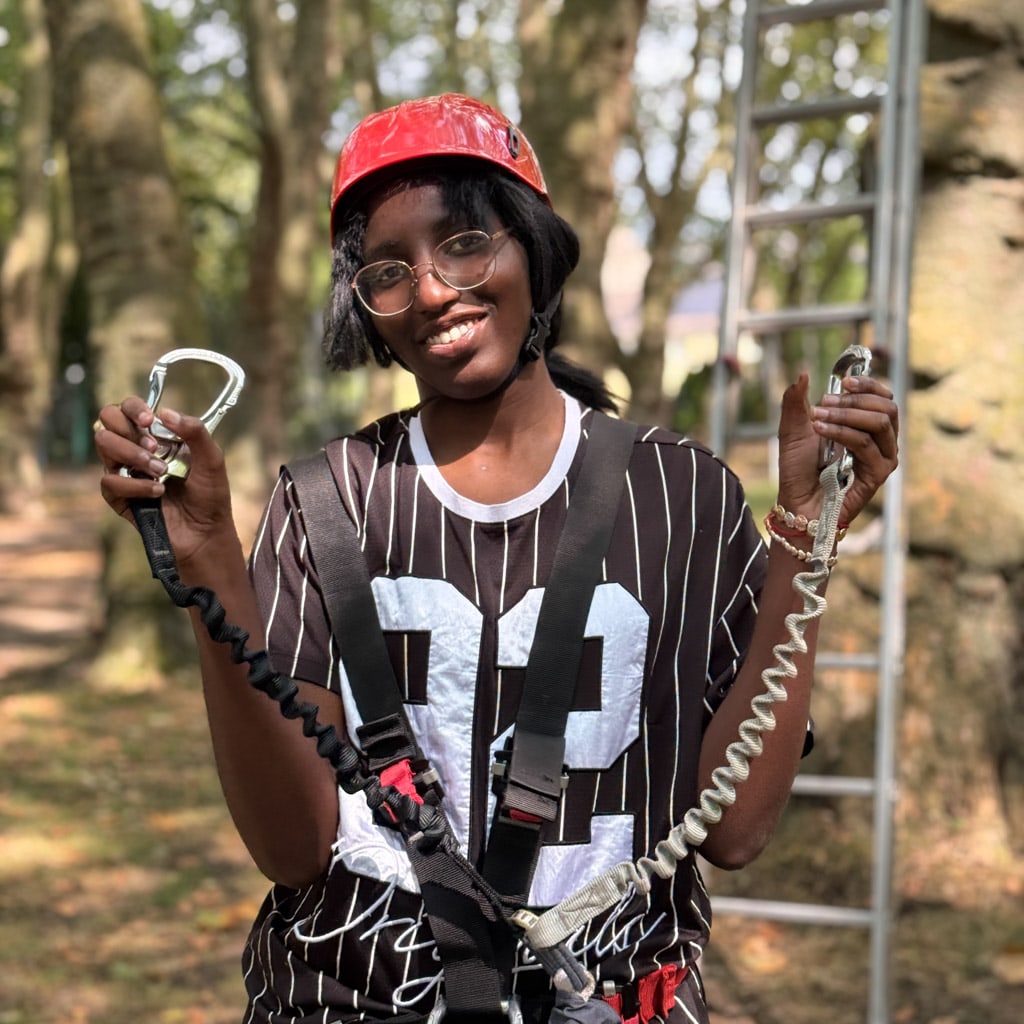
Such a level of self-organisation does not happen by itself. To make all of this possible, the three partner organisations from Germany, Italy and Spain deliberately created the necessary conditions. They used participatory methods and active involvement to build the trust the group needs, step by step. These methods included negotiating a shared and binding group agreement, discussing different realities of life, role plays on democratic decision-making and team-building activities such as a high ropes course. This intensive process is a good example of how non-formal education methods can lay the foundations for such strong engagement by young people.
Kick-Off for Three Years of Collaboration
This youth encounter in Germany’s Ruhr region marked the beginning of a new three-year partnership. The three organisations, Jugendtreff Parkhaus from Oberhausen, Madiba Società Cooperativa Sociale from Beinasco and Fundación Federico Ozanam from Zaragoza form one of twelve trilateral partnerships in the European network of Generation Europe – The Academy. The young people are now taking the work back to their home cities, where they will put their local plans into action before the next international youth encounter takes place next year.
