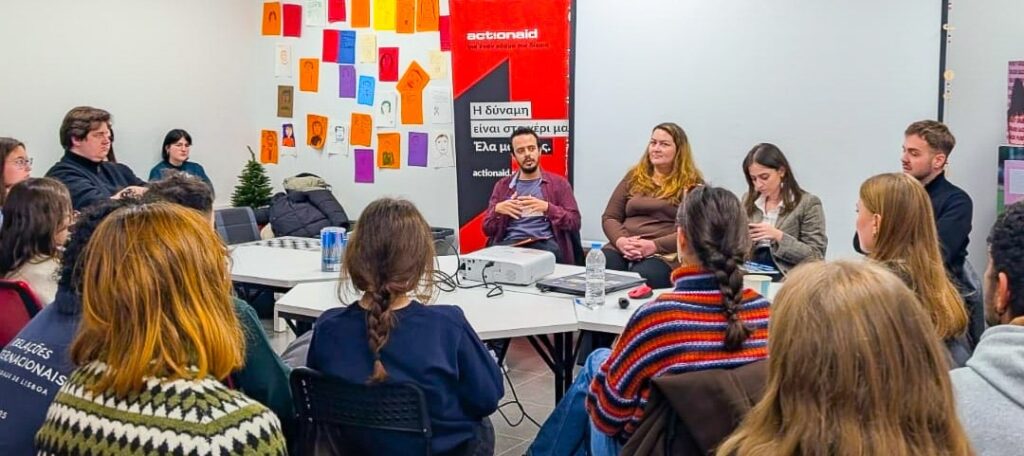
International youth projects need more than just motivated young people, skilled professionals and sufficient funding. They also require good working structures and helpful project management tools. Today, we are opening the door to the engine room of our Erasmus+ cooperation partnership Youth Voices Rising: we will show you how we organise our work.
Developing and Sharing Tools
The work at Youth Voices Rising is divided into a total of ten work packages. Each of these is managed by one of the nine partner organisations. For example, there are work packages for developing training designs, implementing individual events, and supporting young people in their local and European advocacy activities. In addition, we are developing and implementing tools for our project work. Today, we are making two of these tools available to the Community of Practice – for inspiration, adaptation and further development for your own projects. Because no one should have to reinvent the wheel every time.
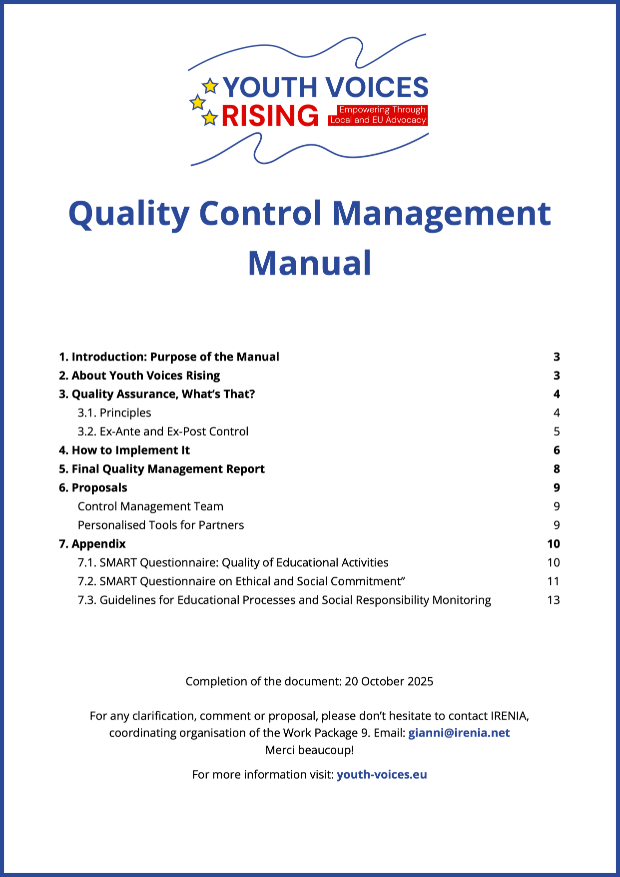
Staying on course: The Quality Control Management Manual
How do we ensure that we don’t lose sight of our goals in all our activities? Our Spanish partner Irenia, Jocs de Pau is leading the work package on quality assurance and has developed a practical Manual for this purpose. This is not about bureaucratic monitoring, but rather continuous support for the process. A central element is the Logical Framework (LogFrame). It is a kind of compass that helps to match the actual activities and resources used with the original goals. The Manual provides a concrete grid for the partner organisations to regularly check whether their own measures are still on the right track, where adjustments are needed, and whether important principles such as inclusion and true participation are actually being put into practice in everyday project work.
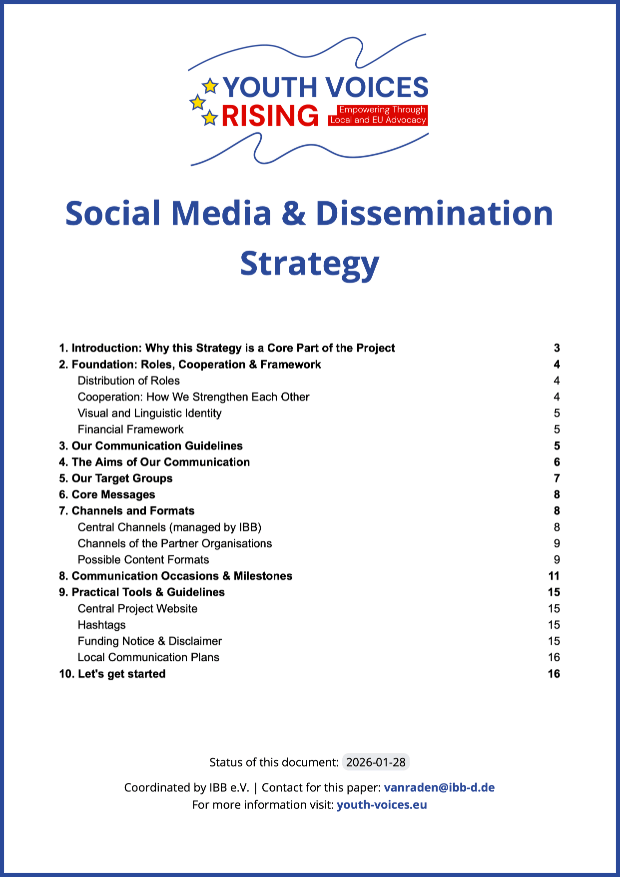
Creating Visibility: The Social Media & Dissemination Strategy
Communication about the overall project is coordinated by the International Association for Education and Exchange (IBB e.V.) in Dortmund. The strategy specifies in detail how the demands and project progress are to be made visible via various digital formats. The specific measures range from shareable images with quotes and short videos for social media to best practice reports and method descriptions for the news blog. In order to reach people across Europe at a local level, the concept focuses on consistent multilingualism and directly links central platforms such as the project website with the local channels of the participating youth organisations.
The strategy identifies core messages for three clearly defined target groups – from young people to professionals to policy makers. To maintain continuous visibility, the document lists specific communication events (milestones) along the project timeline. The most important guideline here is: Authenticity over perfection. Real insights, mobile phone photos from workshops and personal stories from everyday project life beat glossy PR. To ensure that the guidelines remain manageable at the local level, the strategy uses so-called Local Communication Plans. Each partner organisation fills out a simple template to structure its own resources and channels. The strategy also defines how all participating organisations communicate across national borders and give each other digital outreach to engage directly with their target groups.
We know that project management in everyday youth work often has to be done under time pressure. That’s exactly why we share these tools. They provide guidance and simplify processes without restricting us.

The cooperation partnership Youth Voices Rising is co-funded by the European Union. The views and opinions expressed are those of the authors alone and do not necessarily reflect those of the European Union or the European Education and Culture Executive Agency (EACEA). Neither the European Union nor the EACEA can be held responsible for them.